Guide
Mobile Proxies vs Residential Proxies: Which Do You Need?
Discover the key differences between mobile proxies and residential proxies. Compare speed, anonymity, cost, and use cases to choose the right proxy for you.
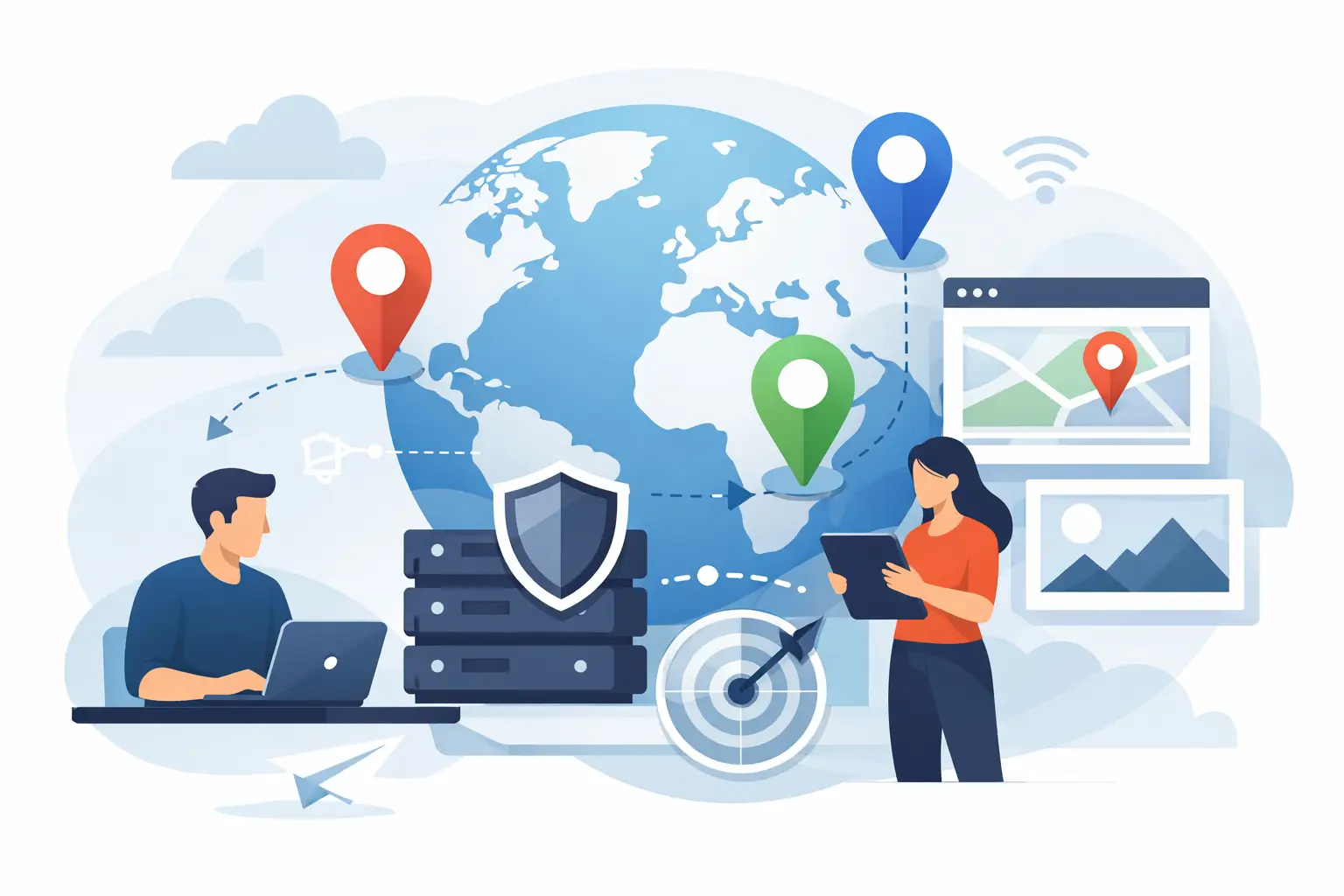
A residential proxy routes traffic through an IP address assigned by an internet service provider to a real home connection, while a mobile proxy routes traffic through an IP assigned by a cellular carrier on a 3G, 4G, or 5G network. For teams comparing mobile proxy vs residential proxy, the real decision usually comes down to cost, detection tolerance, targeting needs, and how much control they need over sessions.
For most scraping, ad verification, and market research workflows, residential proxies are the better balance of speed, scale, and cost, while mobile proxies make sense when carrier-level trust signals matter more than efficiency.
FlameProxies works in that residential proxy space, with fast onboarding, country and city targeting, and pay-as-you-go pricing that helps teams get moving without a long setup cycle. That matters when the job is to test workflows quickly and keep traffic running without friction.
How each proxy type works
The practical difference starts with where the IP comes from and how often it changes. That affects trust signals, session stability, and what kind of workloads each proxy type can handle well.
What a residential proxy is
A residential proxy uses an IP address tied to a real household connection. Websites tend to treat these IPs as closer to normal user traffic, which makes them useful for scraping public data, ad checks, and regional testing.
What a mobile proxy is
A mobile proxy uses an IP assigned through a mobile network carrier. Since many mobile carriers share IP ranges across large groups of users, the traffic can look especially natural, which is useful when a platform is sensitive to residential patterns.
How IP rotation and session control differ
Residential proxy networks often offer both automatic rotation and sticky sessions. That gives operators a choice between freshness and continuity, which is useful for login flows, carts, and paginated scraping.
Mobile proxies usually rotate through carrier-assigned IP pools with strong trust signals, and session control can be more limited depending on the provider. In practice, that makes mobile proxies useful for short-lived checks, while residential proxies often provide more flexible control for sustained workflows.
Core differences that affect performance
The biggest gaps show up in cost, speed consistency, reliability at scale, and the trust profile that websites attach to each type. Those differences usually matter more than the headline proxy label.
| Category | Residential Proxies | Mobile Proxies |
|---|---|---|
| Price | Usually more cost efficient for large-scale jobs, with pay-as-you-go billing common. | Usually more expensive because mobile IPs are harder to source and maintain. |
| Speed | Often faster and more consistent for repeated data collection. | Can be fast, though carrier routing may add variability. |
| Reliability | Strong for sustained scraping, research, and verification workloads. | Strong trust signals, though availability and session behavior can be less predictable. |
| Best Use Cases | Web scraping, ad verification, price monitoring, market research. | Mobile app testing, sensitive logins, carrier-style traffic simulation. |
Price and cost efficiency
Residential proxies usually win on cost efficiency for teams that move a lot of data. Mobile proxies can carry a premium because carrier-grade inventory is harder to source and maintain.
Speed and response consistency
Residential networks often deliver steadier response times for repetitive requests. Mobile networks can perform well, though carrier routing and shared infrastructure may introduce more variation.
Reliability under heavy request volume
For heavier automation workloads, residential proxies often hold up better because they are built for broad, scalable usage. Mobile proxies can be durable, yet they are not always the most economical choice for high-volume collection.
Detection risk and trust signals
Mobile IPs often carry strong trust signals because they come from carrier networks shared by real users. Residential IPs also look natural, and in many public-web workflows they provide the right mix of realism and scale without paying mobile-level pricing.
Best fit by use case
The right choice depends on what the traffic is trying to accomplish, not just how it connects. Some workflows reward broad scale and flexible targeting, while others need carrier-level behavior.
Web scraping and public data collection
Residential proxies are usually the better fit for scraping public sites, product listings, and pricing pages. They offer a strong balance of speed, rotation, and cost, which matters when requests run all day.
Ad verification and geo-targeted checks
Both proxy types can help here, yet residential proxies are often enough for checking how ads render across regions. Mobile proxies can be useful when a platform is especially sensitive to network type or device-like traffic.
Price monitoring and market research
Residential proxies fit well when teams need stable access to regional data, competitor pricing, or stock availability. Sticky sessions can help preserve continuity during a longer research sequence.
Social media and app-centric workflows
Mobile proxies tend to shine when the workflow is centered on mobile app behavior or carrier-style access patterns. Residential proxies still work for many account and content tasks, especially when teams need better economics and broader targeting.
Targeting, scale, and operational control
Targeting precision and session control often decide whether a proxy plan works in practice. Teams also need enough inventory to expand across regions without rebuilding their setup.
Country and city-level precision
Residential proxy platforms often support country and city-level targeting, which helps with localized checks and market research. That level of control is especially useful when content, pricing, or availability changes by city.
Sticky sessions vs automatic rotation
Sticky sessions help keep the same IP active for continuity, which is useful for logins and multi-step flows. Automatic rotation helps spread requests across IPs and reduce repetition, which is useful for large scraping jobs.
Scaling across global markets
A large residential network makes it easier to expand into multiple markets without redesigning the workflow. For global teams, that scale is often more practical than relying on a smaller, more specialized mobile pool.
When FlameProxies is the better choice
FlameProxies is a strong fit when the goal is fast, reliable residential proxy access without a long buying process. It gives teams a practical route into production work with control, scale, and straightforward pricing.
Why residential proxies often win for data teams
Residential proxies often fit data teams better because they combine broad compatibility with cleaner economics. They are usually easier to scale across scraping, verification, and research workloads than mobile proxies.
FlameProxies network size and global reach
FlameProxies offers over 81 million IPs with country and city targeting for global workflows. That kind of reach helps teams cover multiple markets without piecing together separate providers.
Fast onboarding, pay-as-you-go pricing, and non-expiring bandwidth
Users can sign up for free, explore the dashboard, and start routing traffic in under two minutes. Pricing starts at $0.50/GB, bandwidth never expires, and no credit card is required to begin.
How to choose with confidence
The best choice comes from matching proxy behavior to the real workload. Teams should weigh trust signals, cost, targeting needs, and how much session stability matters from request to request.
Decision criteria for teams and solo operators
Teams should ask four questions: how sensitive is the target site, how much data needs to move, what regions matter, and whether sessions must stay stable. Solo operators usually benefit from residential proxies first, unless the job specifically depends on mobile network behavior.
Common buying mistakes to avoid
A common mistake is paying mobile-proxy prices for a workload that residential proxies can handle well. Another is ignoring session control, since the wrong rotation pattern can break logins, carts, or multi-step checks.